Hey there, if you’re dipping your toes into the world of digital promotions, you’ve probably noticed how influencers have become the go-to for brands looking to connect with real people. In France, this scene has exploded, blending creativity with some pretty strict rules that keep things honest. We’re talking about a market that’s not just growing—it’s maturing fast, especially as we wrap up 2025. This piece dives into the latest numbers. Insights, brands figure out how to make the most of these partnerships without stepping on any toes. Whether you’re a small business or a big player, understanding these stats could be your edge in 2026.
Market Overview and Growth Statistics
Let’s kick things off with the big picture. The influencer marketing landscape in France is buzzing with activity, and the numbers back it up. Over the past year, from April 2024 to March 2025, around 47,200 content creators churned out more than 322,000 mentions of various brands. That’s a massive volume, showing how deeply embedded this strategy has become in everyday social media feeds.
On the spending side, things are heating up, too. Ad budgets for influencer promotions in France are projected to hit about $653 million this year alone. It’s part of a broader global trend. The entire industry is valued at roughly $32.55 billion in 2025, with Europe playing a key role. What’s driving this? Well, after the 2023 law that tightened regulations on influencers, brands have gotten more professional about their approaches. No more wild west—it’s all about measurable results now.
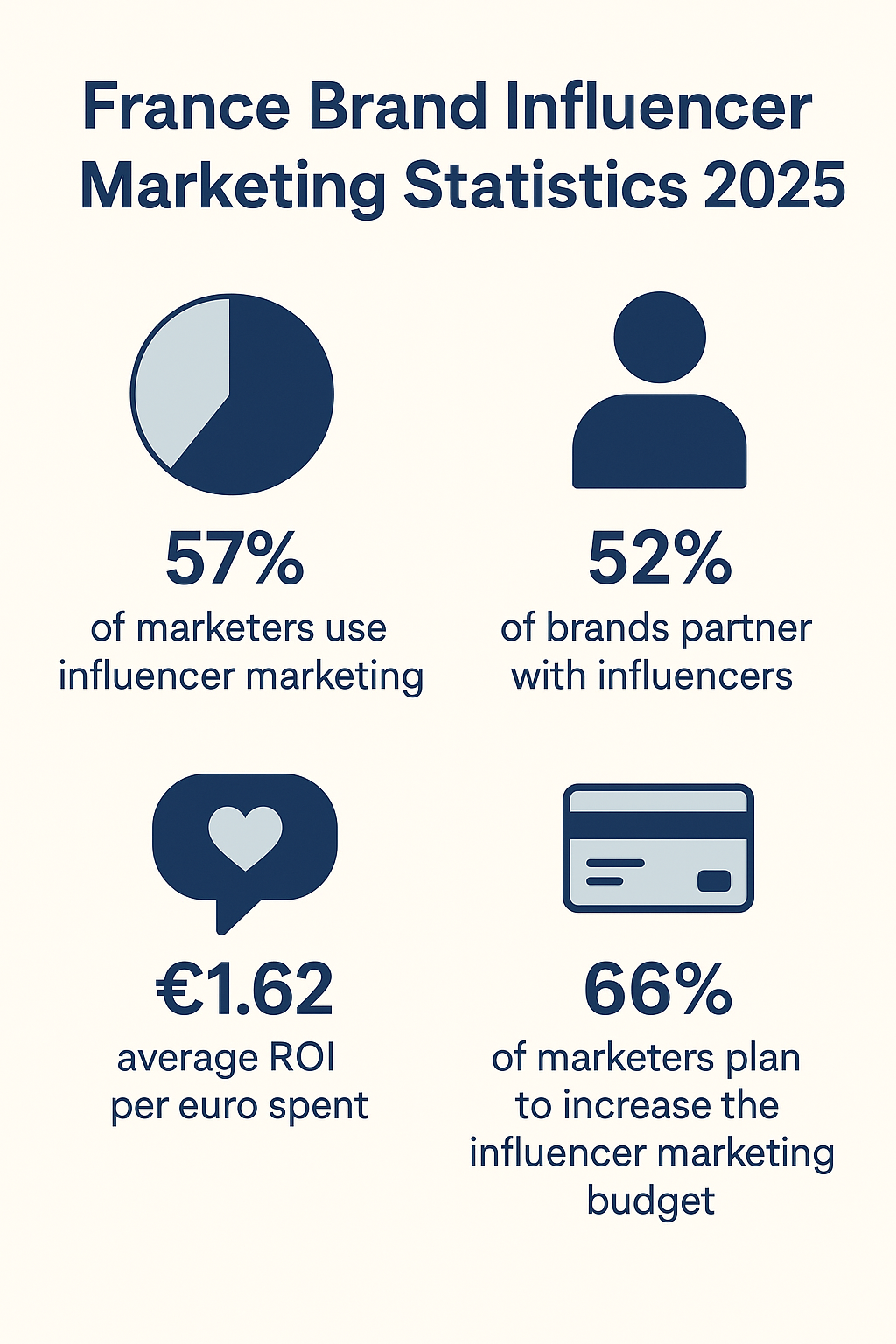
Looking ahead, experts predict even more growth. By 2027, France could see up to 150,000 active creators, but right now in 2025, we’re already seeing a surge in collaborations. Brands are pouring money into this because it works, especially when you consider how 75% of European marketers are teaming up with micro-influencers for targeted reach. It’s not just hype; these statistics highlight a shift toward sustainable, data-backed strategies that resonate with French consumers who value authenticity over flashy ads.
Key Platforms Dominating in France
When it comes to where all this action happens, a few platforms stand out like sore thumbs. Instagram remains the king for sheer volume and sponsored posts, making it a staple for brands wanting broad exposure. But don’t sleep on Ticktock—it’s stealing the show with insane vitality and engagement rates that often outpace others. In France, Ticktock’s short-form videos are perfect for quick, catchy campaigns that go viral overnight.
YouTube plays a supporting role, especially for in-depth content like tutorials or reviews, while Snapchat and even X (formerly Twitter) chip in for niche discussions. What makes France unique? The multi-channel approach is key—brands mix Instagram for reach with TikTok for that personal touch. For instance, data from recent reports shows complementary strengths: Instagram handles the polished aesthetics, but TikTok drives real interactions.
If you’re curious about diving deeper, check out this YouTube video on influencer marketing in France from a Paris event in June 2025—it breaks down how platforms like YouTube are evolving in this space. It’s a great watch for seeing real examples in action.
Transparency and Ethical Trends
One thing that’s really set France apart in 2025 is the push for transparency. Thanks to regulations from bodies like the APP, about 84% of commercial content from influencer is now properly labelled as partnerships. This isn’t just big creators following the rules—even nano and micro-influencer are stepping up, making the whole ecosystem more trustworthy.
Why does this matter? Consumers here are savvy; they demand honesty, and brands that ignore it risk backlash. The 2023 influencer law has professionalised the field, leading to better compliance across the board. Ethical practices aren’t optional anymore—they’re the norm. Think about it: when influencers disclose ties clearly, it builds trust, and that translates to better engagement. In fact, France’s high transparency rates are influencing trends across Europe, where similar scrutiny is ramping up.
For more on the basics, you might want to read up on influencer marketing via Wikipedia—it gives a solid foundation on why ethics play such a huge role globally.
Influencer Types and Engagement Insights
Not all influencers are created equal, and in France, the type you choose can make or break a campaign. Micro and nano-influencers—those with under 10,000 to 50,000 followers—are stealing the spotlight for their authentic vibes and niche appeal. Engagement rates tell the story: nano often hit 2% to 6%, while mega-influencers lag at around 0.92% to 1.21%.
French consumers trust these smaller voices more, with recommendations influencing purchases about 8% higher than global averages in some studies. Creator activity is huge too, with a mix of organic and paid content keeping things fresh. In sectors like fashion, average engagement benchmarks from hundreds of brands show micros leading the pack. It’s all about that genuine connection—bigger isn’t always better when you’re aiming for real impact.
Brand Strategies and ROIL in 2025
So, how are brands making this work? Popular tactics include gifting products, affiliate links, and performance-based deals that tie payments to results. Long-term ambassador programs are on the rise, turning one-off posts into ongoing relationships.
The payoff? Impressive ROIL. On average, brands see $5.78 to $6.50 back for every dollar spent on influencer campaigns. In France, about 75% of consumers have bought something based on an influencer’ nod, driving measurable sales. Earned media value adds up too, with 80% of brands keeping or boosting budgets this year. It’s not magic—it’s strategy, like using data to pick the right partners and track everything from clicks to conversions.
Check out the United State (USA) influencer marketing stats for 2025 here
Future Trends and Predictions for France
Peering into the crystal ball for 2026 and beyond, a few trends are bubbling up. AI is set to revolutionise discovery and analytics, helping brands find perfect matches faster. Expect more long-term partnerships and co-created content. Influencers help shape products.
Video will dominate, especially short-form on TikTok and immersive stuff on YouTube. Social commerce—buying right from posts—will explode, and micro-communities will let brands target super-specific groups. With regulations tightening, transparency will only get stricter, but that’s good—it keeps things credible. Overall, France is poised to lead in ethical, innovative influencer strategies.
Conclusion
Wrapping this up, France stands out as a mature hub for brand influencer marketing in 2025, blending robust statistics with smart regulations. From skyrocketing ad spends to high engagement from trusted creators, the data paints a picture of a thriving ecosystem. If you’re a brand eyeing growth, focus on transparent, data-driven tactics—it’s the way forward. Looking to 2026, with AI and video leading the charge, the opportunities are endless. Stay ahead by adapting now.