You know, as someone who’s been keeping an eye on digital marketing for years, it’s wild to see how influencer marketing has gone from a quirky side hustle to the beating heart of brand strategies in the United States. Back in the early days, it was all about chasing viral moments with big-name celebs, but now? It’s smarter, more data-driven, and laser-focused on real connections that actually move the needle. Heading into 2025, with economic ups and downs and tech shaking things up, U.S. brands are doubling down on influencers not just for buzz, but for bottom-line results. If you’re a marketer stateside, these United States (USA) brand influencer marketing statistics for 2025 are your road map to staying ahead—think billions in spend, sky-high ROIL, and trends that could redefine your next campaign.
This deep dive pulls from the freshest reports and surveys. Why influencer marketing isn’t just surviving; it’s thriving in the USA. We’ll break down the numbers, from massive market growth to consumer quirks, and wrap with actionable steps. By the time you finish, you’ll have the insights to craft campaigns that feel authentic and deliver serious returns. Let’s jump in.
I. Introduction
Picture this: In a sea of cookie-cutter ads, consumers are tuning out—fast. Enter influencer marketing, the USA’s go-to for cutting through the clutter with voices that feel like friends, not salespeople. As of 2025, the United States remains the undisputed king of this space, boasting the world’s most mature ecosystem where brands treat influencers as strategic partners, not one-off endorsements.
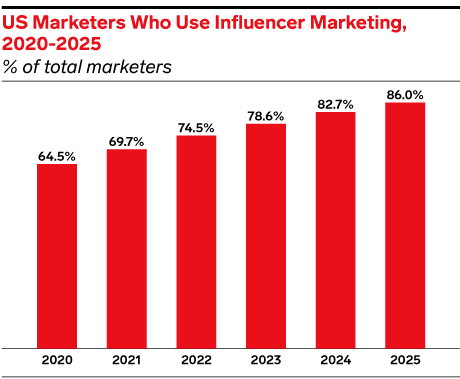
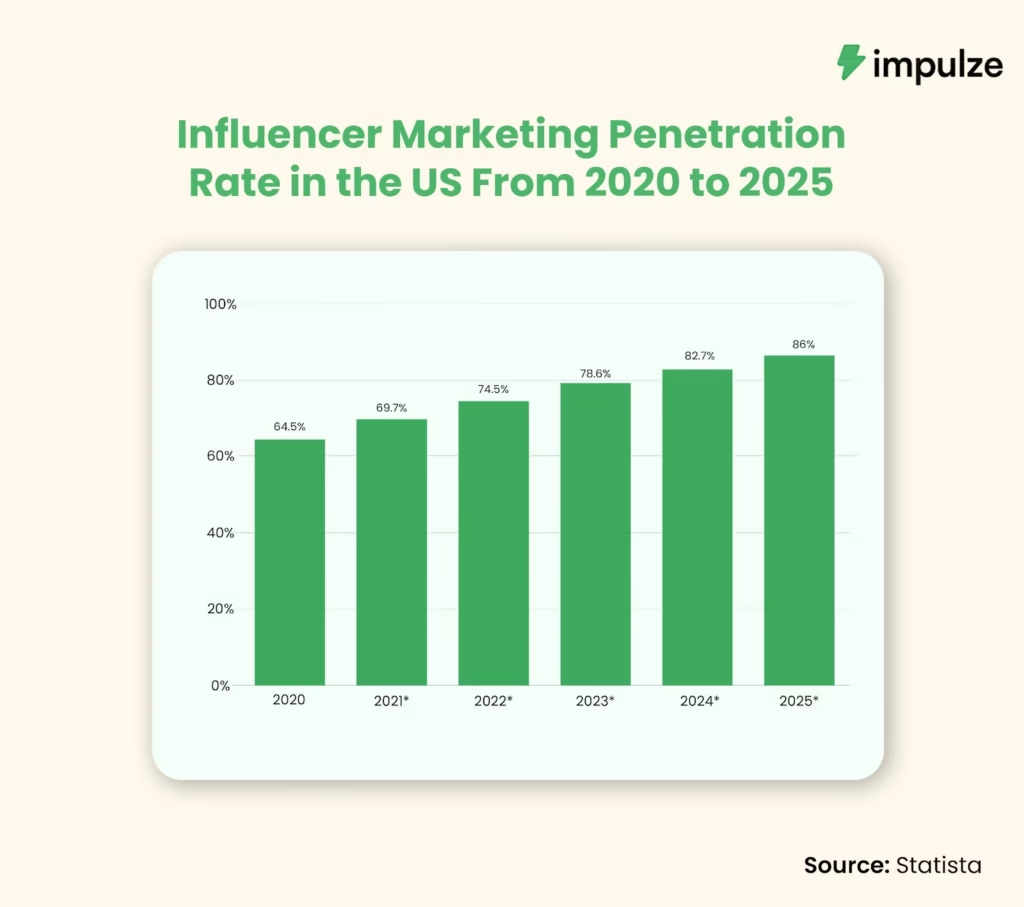
Here’s the hook: U.S. influencer spend is projected to $10.52 billion this year, a hefty 15% jump from 2024, while a whopping 86% of American marketers are already in the game. That’s no small potatoes—it’s proof that in the USA, brands aren’t experimenting anymore; they’re all-in. Our thesis? 2025 flips the script from reckless growth to precision plays: discoveries, performance-tied payouts, and ironclad compliance, FTC rules. It’s about sustainable wins in a crowded feed, and these stats show how U.S. brands can lead the charge.
II. Market Size & Growth of the U.S. Influencer Marketing Industry
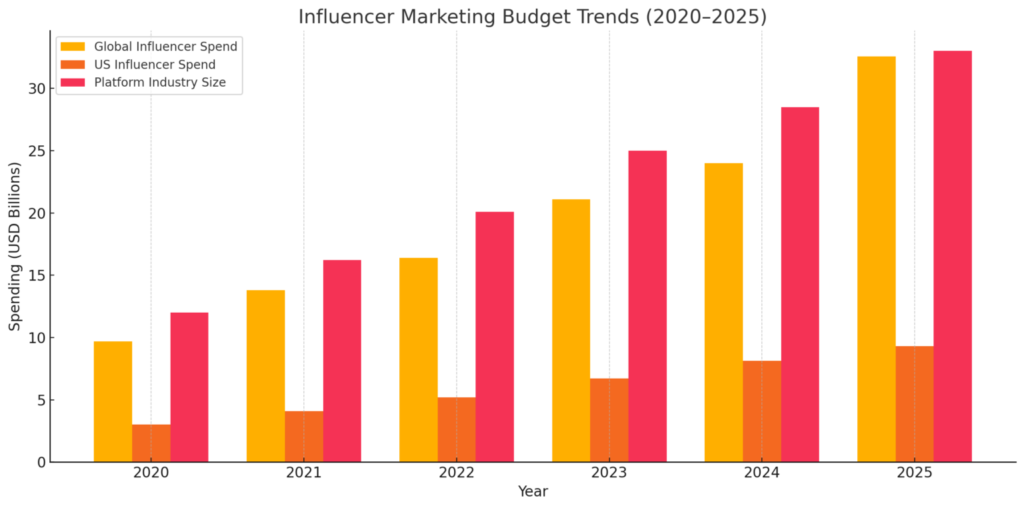
Let’s talk big picture first—the money flooding into the United States (USA) brand influencer marketing statistics for 2025 tells a story of unstoppable momentum. Total spend clocks in at $10.52 billion, up from about $9.15 billion last year, fueled by a maturing market that’s outpacing traditional digital ads. That’s brands like Nike and Glossier pouring cash into creator collars that blend seamlessly with everyday scrolls.
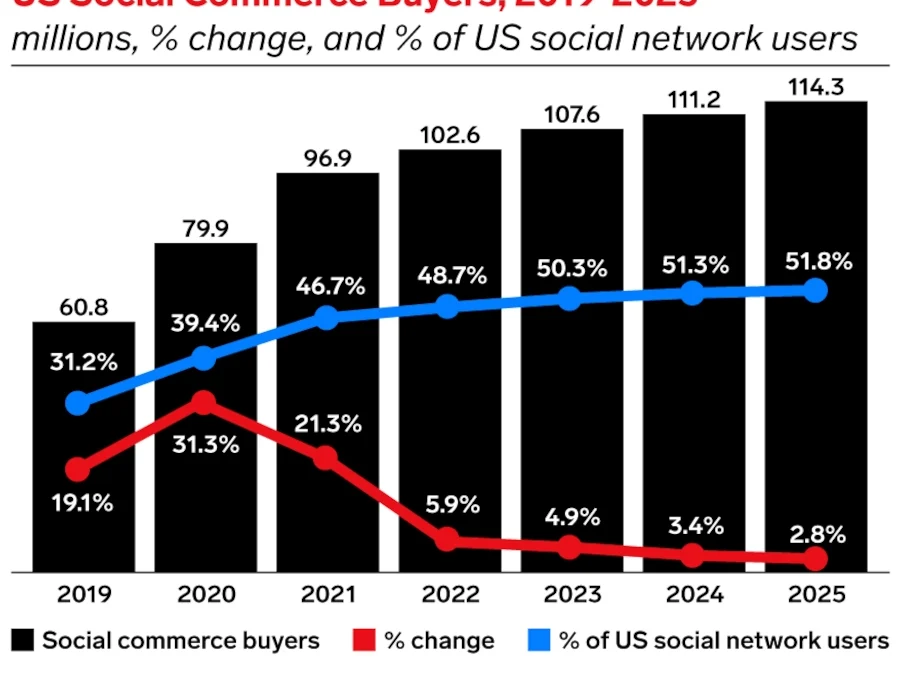
Looking further out, projections point to $15 billion by 2030, with a steady 12-15% CRAG keeping the pedal down. The U.S. snags roughly 38-40% of the global pie, which itself balloons to $32.55 billion this year—meaning American innovation, from TikTok viral to YouTube deep dives, sets the global tone. Why the surge? Social commerce is exploding, with U.S. sales hitting $83 billion, and consumers craving that peer-to-peer vibe over polished pitches. It’s not hype; it’s a shift where every dollar spent on influencer yields smarter, more targeted growth.
III. Brand Adoption & Budget Trends
Adoption? It’s basically the new normal for U.S. brands. Clocking in at 86% of marketers using influencer in 2025—up from 70% just a few years back—it’s clear this isn’t a trend; it’s table stakes. From startups in Austin to Fortune 50 in New York, companies are weaving creators into everything from product launches to crisis communications.
On budgets, 71% of U.S. marketers are bumping up their influencer allocations, making it the top-priority channel for the third year running. Average spend? 18-23% of total digital budgets now flow to influencers, a 10% hike from 2024, as ROIL proof silences the sceptics. It’s pragmatic: With economic jitters, brands are chasing efficiency, and influencers deliver—think 80% maintaining or growing budgets despite the squeeze. For the United States (USA) brand influencer marketing statistics, this signals a pivot to long-haul partnerships over quick hits.
IV. Platform Breakdown 2025
Platforms are where the magic happens, and in the USA, it’s a battle royal with clear front-runners. Instagram still rules 71% of campaigns, thanks to its visual punch and hospitable posts that turn likes into buys. But Ticktock’s stealing the show with 31% You spend growth, capturing 28% of the pie as Gen Z flocks to its raw, algorithm-furled feeds.
Check out the United Kingdom (UK) influencer marketing stats for 2025 here
YouTube? It’s the ROIL beast at 32% of dollars, perfect for long-form storytelling that builds lasting loyalty. Emerging dark horses like Twitch (for gaming niches), LinkedIn (B power moves), and Reddit (community-driven chats) are gaining 10-15% traction, diversifying beyond the big three. The trend? Multichannel plays, where U.S. brands sync Instagram Reels with YouTube hauls for max reach. For 2025, bet on short-form video dominating 60% of budgets.
V. Influencer Tier Preferences
Gone are the days of mega-star obsessions; 2025’s United States (USA) brand influencer marketing statistics spotlight the underdogs. Nano and micro-influencers (1-100 followers) snag 68% of partnerships, boasting engagement rates of 3.2-7.8% that dwarf bigger names. Why? They’re niche experts—think a Brooklyn baker hyping sustainable snacks to foodies—who feel real, not rented.
Mid-tier (100-500) hold 21%, striking that sweet spot of scale and sincerity for broader awareness. Macros and celebs? Down to 11% from 19% in 2022, as brands wise up to their sky-high costs and meh engagement. The takeaway: Prioritise tiers that match your audience—bans for hyper-local loyalty, micros for viral potential.
VI. ROIL & Performance Metrics 2025
Crunching the numbers, influencer marketing shines brightest on ROIL. U.S. brands average $5.78 in earned media value per $1 spent—up from $5.20 in 2023—making it a no-brainer over display ads’ measly $2 return.
Costs vary by tier: Nan’s run $75-400 per post, micros $400-3, macros $5-50+—but the payoff? Top campaigns hit $18 ROIL. Beauty leads at 28% of spend, fashion/apparel 22%, and health 15%, where endorsements spark impulse buys. Engagement? 2-3 traditional ads, with 81% of marketers calling it “highly effective.” It’s proof: In the USA, performance trumps vanity every time.
VII. Consumer Behaviour & Trust Statistics
Consumers are the real bosses here, and 2025 stats show influencers pulling serious strings. 61% of Americans bought something last year off a creator’s rec—jumping to 86% who’ve done it at least once annually.
Trust? 49% of Gen Z and 42% of millennials pick influencers over ads, craving that unfiltered vibe. No surprise 72% follow at least one creator, averaging 12 per person—mostly for discovery in fashion and tech. It’s a trust economy: 69% believe peer endorsements over celeb plugs, driving 49% of monthly buys. For U.S. brands, this means leaning into relatable voices that spark genuine FOO.
VIII. Top Trends Shaping USA Influencer Marketing in 2025
2025’s vibe? Smarter, not louder. AI tops the list, with 69% of U.S. agencies using it for creator matching and predictive tweaks—boosting outcomes by 66%. Performance pay surges to 44% of deals, tying comps to sales via affiliates.
Creator-led empires like Prime Hydration are booming, with equity shares luring top talent. Stoppable content? It’s earning $83 in U.S. social commerce. And FTC’s cracking down—89% of posts now disclose properly with #ad, dodging fines and building cred. For a quick visual on these shifts, check this YouTube breakdown: Influencer Marketing in 2025: What Creators & Brands Need to Know. It’s spot-on for navigating the USA’s evolving scene.
IX. Challenges Facing U.S. Brands
No rose without thorns—51% of U.S. marketers fret over true ROIL tracking, with attribution a nightmare in fragmented feeds. Fraud hits 38%, from bot followers to fake engagement, eroding trust. Platform flux? 34% cite algorithm tweaks and TikTok drama as sleep-stealers.
Budget woes loom too: 18% are ditching mega-deals for costlier micros that punch above weight. The fix? AI audits and diversified tiers to weather the storm.
X. Future Outlook 2026–2030
Peering ahead, U.S. influencer marketing hits $15 billion by 2030, with virtual creators claiming 8-12% share by 2028 via AI avatars that never sleep. Platforms consolidate—think mega-apps blending TikTok’s fun with LinkedIn’s pros—while agencies merge for scale.
Expect hyper-personality, with AR try-nos and meta verse events standard. Regulations tighten, but so does ROE focus—promising a golden era for authentic U.S. brands.
XI. Conclusion & Action Steps
To sum up 2025’s United States (USA) brand influencer marketing statistics: $10.52 spend, 86% adoption, $5.78 R, and AI as the secret sauce. It’s a year of refinement, where trust and tech collide for epic wins.
Your moves? 1) Hunt micro-creators via AI tools. 2) Test affiliate models for pay-for-performance. 3) Go heavy on Ticktock and YouTube hybrids. 4) Track beyond likes—focus on sales lift. Nail these, and you’ll ride the wave to 2030’s $15 horizon. What’s your first play?